
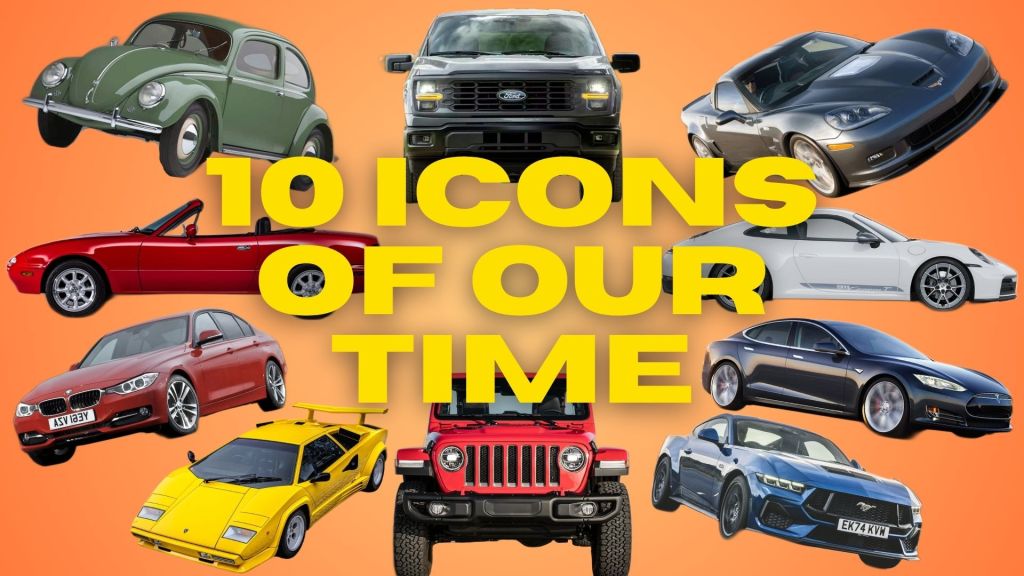
MotorTrend magazine is a household name in automotive entertainment, and their magazine is celebrating 75 years of existence. This year also marks a new beginning for the magazine; they have changed their subscription from monthly to quarterly publications. That means more pages of better quality and longer articles. To celebrate all this, the spring issue lists the “10 most Iconic Vehicles of Our Time”,
Here’s the breakdown:
-Volkswagen Beetle
-Mazda MX-5
-Ford Mustang
-Tesla Model S
-Porsche 911
-Jeep Wrangler
-BMW 3 Series
-Ford F-150
-Lamborghini Countach
And finally, the Icon of icons, elected by the readers of MotorTrend Magazine through an online poll: The Chevrolet Corvette.
The easiest part of making a list like this is deciding who will be on it. MotorTrend did that part.
After that, it’s days, weeks, and maybe months of work to figure out what combination of letters and words would make the correct sentences and paragraphs to describe the reasons why the contestants were chosen. MotorTrend didn’t do that part.
But that’s okay. I’ll take on the task. I’ll explain why these cars are icons. I’ll do what a big-budget magazine wasn’t bothered to do.
For starters, we must define what being an icon means.
The noun ‘icon’ has a few meanings. But in this context, we will use the following definition from the Oxford dictionary: A person or thing regarded as a representative symbol or as worthy of veneration.
So, why is the Volkswagen Beetle an iconic vehicle of the past 75 years?
Sure, VW sold over twenty million Beetles, but one doesn’t simply become an icon because it is popular or famous. If that were the case, the girl who sang Call Me Maybe would be a living legend! But I can’t remember her name, so point proven.
If it isn’t popularity, then what makes an icon?
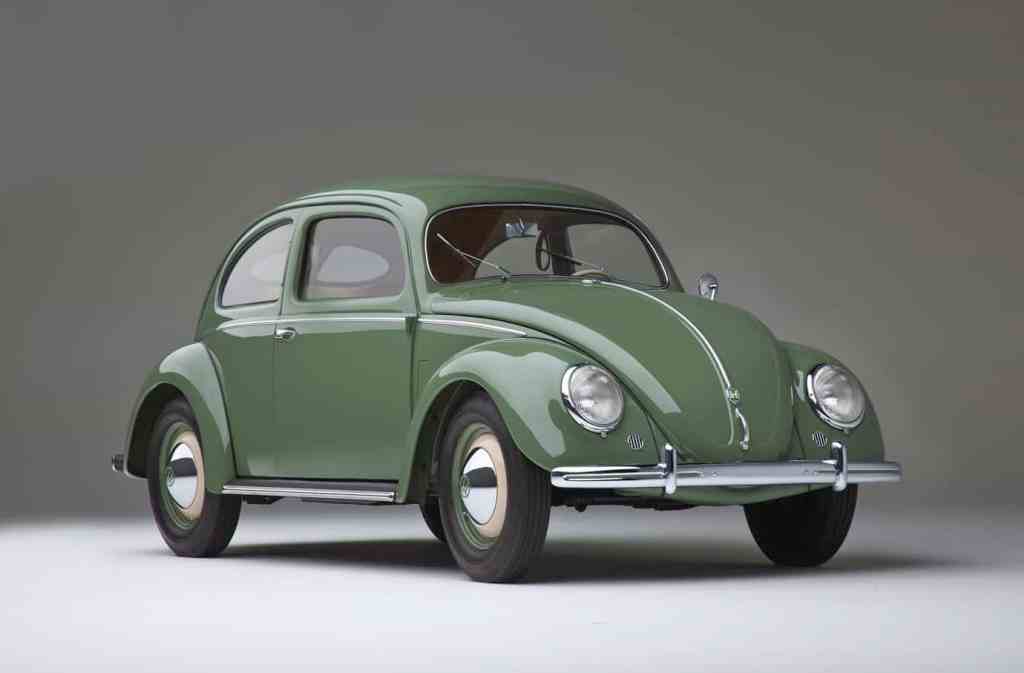
The Beetle is known as the car of the People. But it was originally the car for the people of Nazi Germany only. It was ordered by Hitler to further his propaganda campaign. The few Germans who had the money to get one never did, and the money they gave to buy one went directly towards the war effort. At the time, for those Germans, the Beetle must have been the automotive representation of their deceitful and treacherous politicians, who, to top it off, were driving around in Beetles – convertible ones at that. Those bastards.
The Beetle then managed to become a symbol of peace and love, which is a fascinating switcheroo of public perception. This was caused by the hippies who decided it looked cool, and it was the perfect car to represent their lifestyle: cheap, low maintenance and a little out of the ordinary. With hindsight, a car designed by a totalitarian regime becoming a symbol of anti-capitalism sounds about right.
Anyone over the age of 10 can recognise a Volkswagen Beetle because it became more than a method of transportation, it transcended that title and became: The Bug. The Bug is to the Beetle, what Batman is to Bruce Wayne, or what Superman is to Clark Kent. They’re the same person, but the message they represent is different. When the Beetle acquired the affectionate name of The Bug, it lost all its ties to its dark past. It made a new image for itself. It became an Icon, and therefore, made it on this list.
– The Mazda MX-5 MIATA
‘MIATA’ is another name for the MX-5. It also happens to be an acronym:
MIATA Is Always The Answer.
It is now common knowledge that an MX-5 is the solution to all your automotive problems. Even though it’s a two-seater sports car, it is the perfect people carrier if, of course, you only need to move one passenger; if you add a boot-rack it’s the perfect furniture mover because the sky will then be your limit; the perfect work vehicle, daily driver and the perfect weekend warrior, all at the same time.
It is the essence of a sports car: the engine is in the front, the power comes out of the back wheels, it’s lightweight, it is not very powerful so you can drive it flat out all the time and even if you don’t, it’s still a butt-load of fun; in sum, it is everything the British sports cars wish they were, except the Mazda is reliable and cheap to fix if anything were to break. The cherry on top of the cake – as the French would say – the MX-5 is more fun than most cars that cost ten times the price. Anyone can get an MIATA, therefore, the saying is wrong: Money can buy happiness, because it can buy an MX-5, and that’s basically the same thing.
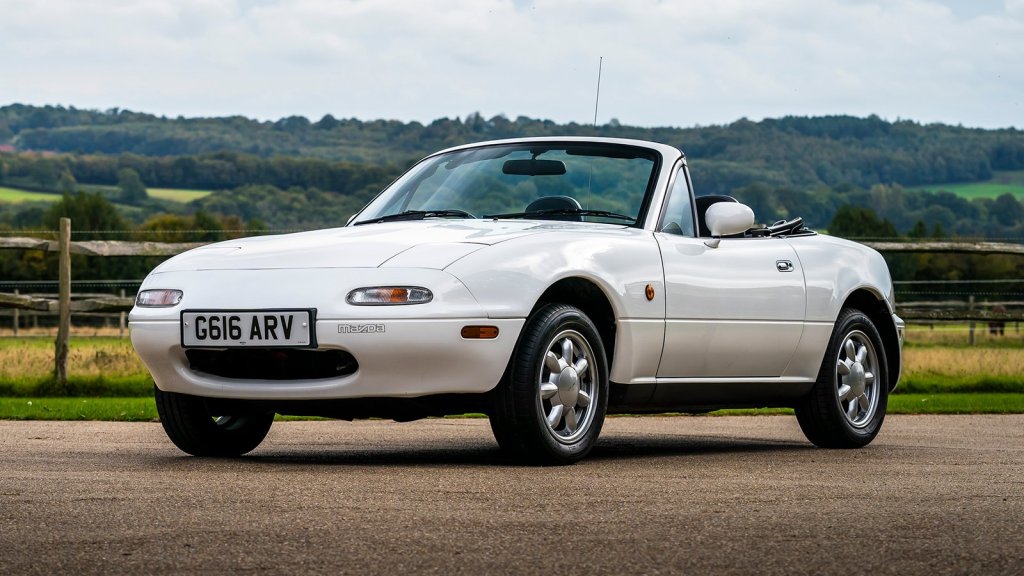
Ultimately, the Mazda MX-5 offers cheap and reliable thrills for all. If you take three seconds to look online, you’ll easily find a first-generation MIATA’s for under ten grand (if you dramatically lower your standards, you can find some under five), and the most expensive one brand new is around forty thousand dollars. The MIATA represents the best sports car money can buy; it’s done so for over 35 years, hence why it’s an icon.
– The Ford Mustang
The Mustang is an icon, partially because without it, we wouldn’t have the Chevy Camaro, the Dodge Challenger, the Pontiac Firebird and all the other American muscle cars, but also because it never stopped being everything the American public wanted: It looked sexy, macho and sporty at the same time, it was a two-door 2+2, front engine rear-wheel drive, had a long hood (with a big motor under it if you were lucky); it was everything we had in Europe with the Triumphs, Aston Martins, Lambos, Ferraris and company, but for once it was made in America, for Americans. To top it off, it didn’t cost an arm, a leg or your firstborn child.
The sales figures of the first-generation Mustang are proof that the USA was desperately waiting for the Mustang to exist. Soon after the original Mustang’s release, all the other American brands followed suit and made car to compete with it.
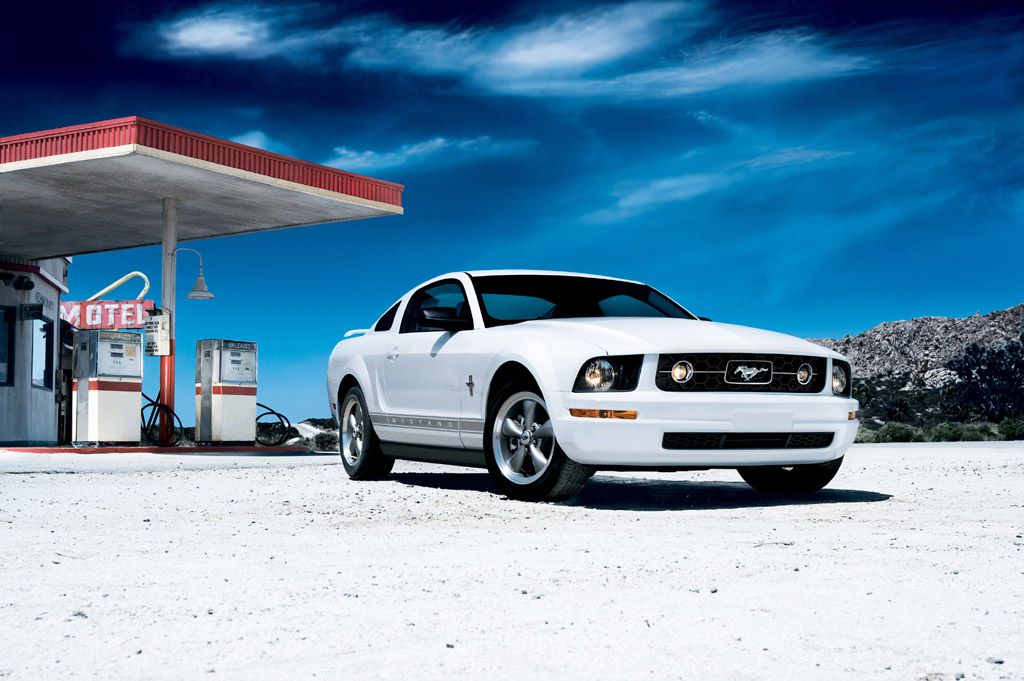
The ‘Stang has always been and will always be there for the American public. Sure, the Camaro and the Challenger are still for sale today, but they were both discontinued and only brought back to life after the financial and energy crises passed. The others, like the Firebird, the AMC Javelin and the Plymouth Barracuda, disappeared and never came back.
But the Mustang never left. It muscled through as any American would. The ‘Stang is here to stay. It evolves with each generation, to make sure that it will always have a place in someone’s garage no matter the socioeconomic situation.
This car used to represent straight-line speeds and bad cornering capability, but now, with crude oil, bald eagles and Bud Light, it is an icon that represents the United States of America.
*Bald eagle screams in the distance*
– The Tesla Model S
If you had to summarise the history of the automobile, it’d go something like this:
Chapter One was written by Karl-Benz in 1886 when he invented the Patent-Motorwagen, the first motorcar. On that day, a very select few didn’t need to ride a horse or walk to their destination. The world had officially changed.
Twenty years later, Ford produced the Model T. Thanks to Henry Ford, the middle class didn’t need to walk either. The car was available for all; it finally became obtainable. This was the second chapter.
The third chapter is arguably the one we were still in until very recently: it’s the refinement of the internal combustion engine and the car as a whole. They became safer, more efficient, more powerful, and, ultimately, more computerised. Until one day, the computer took over, and the internal combustion engine wasn’t needed anymore. The fourth chapter had begun, marked by the release of the Tesla Model S.
It was an outrage within the car community. The evangelists of the electric motor were pointing their motor-oil-stain-free finger at us – the petrol heads – because we didn’t want to embrace the future. We retaliated and called them mouth breathers, hypocrites, and tree huggers, because, besides name-calling, we had nothing. They were right. Electric is the future. We just didn’t want to admit it because we disagreed their arguments.
You don’t get an electric car to save the planet; every battery made for an electric car is made out of an unfathomable amount of precious and toxic metals mined from open-pit mines. The process probably increases the temperature of the planet by half a degree Celsius for every car made. So take the eco-friendly nonsense out of my face. If you really want to save the planet, you should ride a bike.
The real reason why electric motors are the future is because of its minimal percentage of power loss, therefore, increased efficiency per unit of power used.
What that means is this: if a combustion engine produces 100bhp, by the time it goes through the camshaft, the clutch or torque converter, the transmission, and the drive shaft, your 100bhp is now only 85, and it still needs to go through the differential. So, with a bit of luck, your 100bhp engine will give you a little over 80% of that power at the wheels – Not a very good ratio.
An electric motor, on the other hand, has a close-to-perfect powertrain efficiency ratio. A 100bhp electric motor basically gives you 100bhp to the wheels. That, for the ones who are struggling to follow, is a good thing. As a matter of fact, it’s a thing engineers in the internal combustion world have been desperately trying to achieve since forever.
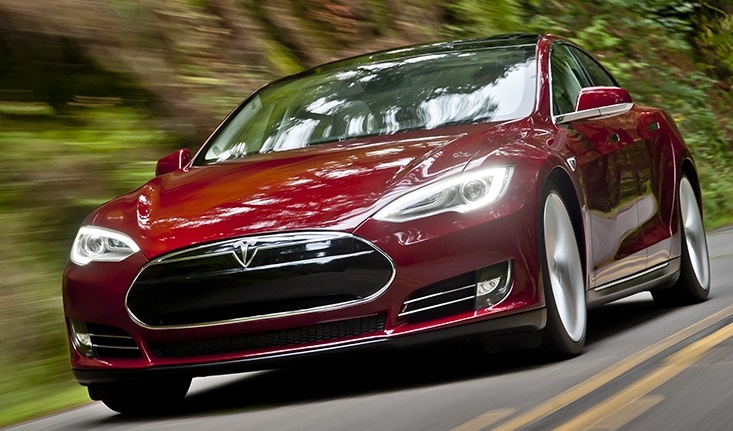
We now have a lot of electric cars on the market, some better than others, but all of them owe their existence to the Tesla Model S. It was the first to popularise the electric car. Like the Model T, the S is a pioneer, and most pioneers become icons. This one became an icon because it represents the future of the automobile, and that’s a title Tesla should be proud to have.
– The Porsche 911
Porsche has a cult following unlike anything else in the car world. To be honest, it’s hard to know why it is so loved because they aren’t the fastest, nor the most powerful. On paper, they aren’t exceptional. So what are they?
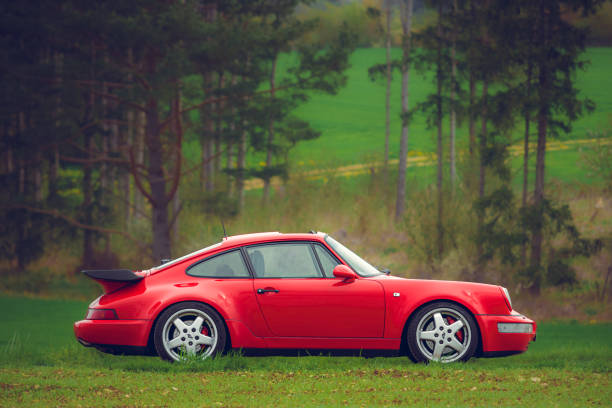
Every 911 is basically an upgraded version of the previous one. There are now eight distinct generations of the 911 spanning over sixty years of production. And despite its unconventional layout, the 911s are absolutely fantastic cars. For those who don’t know what I mean by unconventional, the 911 has its entire drivetrain behind the rear wheels. Meaning that most of the weight is at the back of the car. Traditionally, a sports car has a 50/50 weight distribution with the motor/transmission in the front and the differential in the back. After decades of letting German engineers do what they do best, every new 911 is better and faster than its predecessor.
In fact, their recipe has worked so well that the 911 has become the de facto choice when buying an expensive sports car. Unlike most sports cars, the 911 is really good at being a car. Just a regular car. You can daily drive a 911 with no hassle at all, and you can also take it to canyon roads where it will feel equally at home.
The 911 is an icon because it has no business being this good at everything. Yet it is, and for the car world, that’s a constant. Although it has changed throughout the years, its overall shape and raison d’être hasn’t. It represents refinement, hard work and perseverance. It is a car that represents what we ultimately should all be doing as individuals: always striving for a better self. Our foundations might not be the best, you could have your engine behind you rear axle, but Porche has proven that if we never stop striving for an elevated version of ourselves, we can do like the 911 and become an icon.
– The Jeep Wrangler
No later than this morning, I asked a couple if they had a Jeep. Not because I wanted to know if they owned a Jeep, but rather if they owned an off-road capable vehicle. Because some things are so influential that their names have replaced the words used to describe them. For example: Scotch with tape, Kleenex with tissues, AirPods with wireless earbuds, and Jeeps with off-roaders.
When a man with a small but noticeable beer gut, wearing a brand-new pair of Sketchers, clearly retired from a relatively profitable career in something boring like accounting, says, “I have a Jeep”, you can bet whatever you want that it’s a Jeep Wrangler. It won’t be any other Jeep, because no other Jeep represents the spirit of adventure quite like the Wrangler does. And when you’ve spent your life in an office adding numbers, writing 80085 (BOOBS) with a calculator, or doing whatever an accountant does, you want the most off-road-ist, free-ist, most in-your-face-ist vehicle your hard-earned money can buy. And that will be the Wrangler.
Jeep people are a special breed. Do you realise that a few years ago, Jeep had an ad on television where Wrangler drivers were just waving at each other? It was a special three-finger wave while holding the steering wheel. Wrangler drivers have their own wave, like cult members. And to Jeep’s credit, the impact needed to create a cult around a terrible car like the Wrangler is impressive.
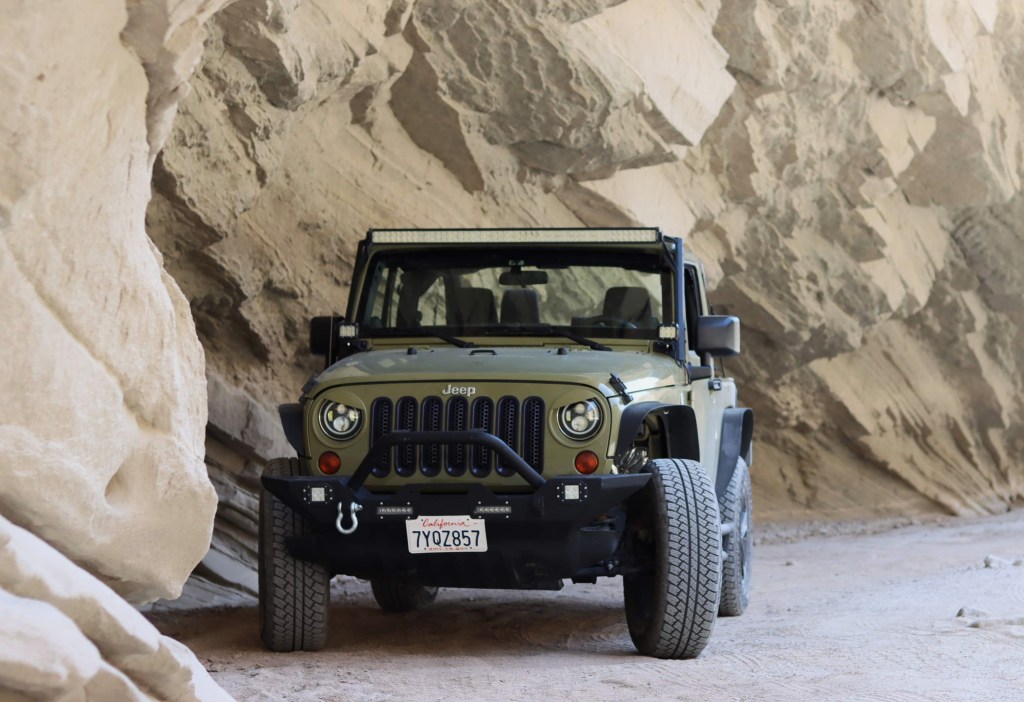
Owning a Jeep Wrangler, according to the guys with the special wave, is more than death-wobbles and terrible wind noise. It’s a way of life. A one-way ticket to freedom. Ultimately, freedom is what off-roading represents, and the Jeep Wrangler has reached the title of icon because it’s the automotive symbol of off-roading and, therefore, freedom.
Right. If you’re still on the toilet reading this, and you’ve paid attention, you might have noticed that we only went through six cars. We are missing four icons. According to MotorTrend, these would be the BMW 3 Series, the Ford F-150, the Lamborghini Countach and the Chevrolet Corvette.
But I disagree.
After thinking about this longly, I’ve decided that if I’m doing all the hard work of explaining why these ten cars are icons, I should at least agree with the bloody list. And even though I agree that the last four cars are important to the car world, are they really regarded as a representative symbol? Or as worthy of veneration? I don’t think so.
So I held a vote to change the list, and because I’m a one-man show, I won.
My first addition to the list is :
– The Bugatti Veyron.
In the early 2000s, the McLaren F1 reshaped the world of supercars when it became the fastest production car in the world with a top speed of 240 mph (386 kph). But then, the Bugatti Veyron was released.
Not only was it faster than the F1, but it was faster no matter who drove it. Unlike the F1, you didn’t need to be a professional race car driver to reach the top speed of the Veyron. My grandma could do it. As a matter of fact, James May did it, and that’s pretty much the same thing. Talking about Top Gear, the trio elected the Veyron as their Car Of The Decade winner. Calling its creation “a real Concord moment”. I remember the feeling of mass hysteria shared by everyone who remotely liked cars about the Bugatti Veyron. It was in every video game, TV show, magazine and wet dream. It was the holy grail of cars.
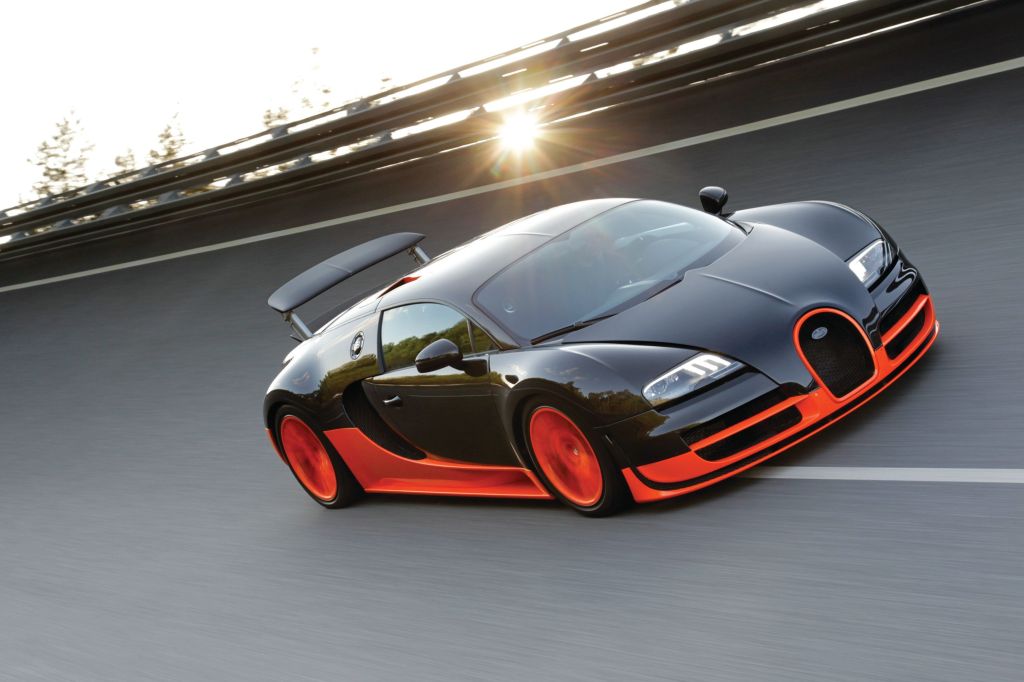
See, what the Veyron did is more than redefining the supercar genre. Supercars are hard to drive; they’re visceral, aggressive, they have incredibly stiff suspensions, and they’re not comfortable, because to go over 200mph, that’s the recipe you have to follow.
But Bugatti didn’t follow the recipe. They made a comfortable, easy-to-drive, and luxurious automobile that just so happened to go faster than the speed of light. Well, not quite, it hit 253mph. But to me, a young boy at the time, 253mph and the speed of light were the same thing.
To do so, the Veyron needed more than just a simple engine; it needed a W16 with four turbos. A W16, with FOUR turbos for Christ’s sake.
Every human with a sausage between his legs has dreamt of a car like the Bugatti Veyron. And then Bugatti made our dreams come true. Obviously, the price tag and everything else revolving around that car was insane; simply changing the tyres cost 25k, and that somehow elevated its status. This car was so special it couldn’t use regular tyres, no, it needed custom-made Michelins that had to be glued to the rim or they’d be ripped off by the monumental power it produces.
The Bugatti Veyron started a new era by creating a new genre: the Hypercar. That’s why the Bugatti Veyron is on the list of the 10 most Iconic Vehicles of Our Time.
Our next entree might anger some, but let me explain why it deserves its spot.
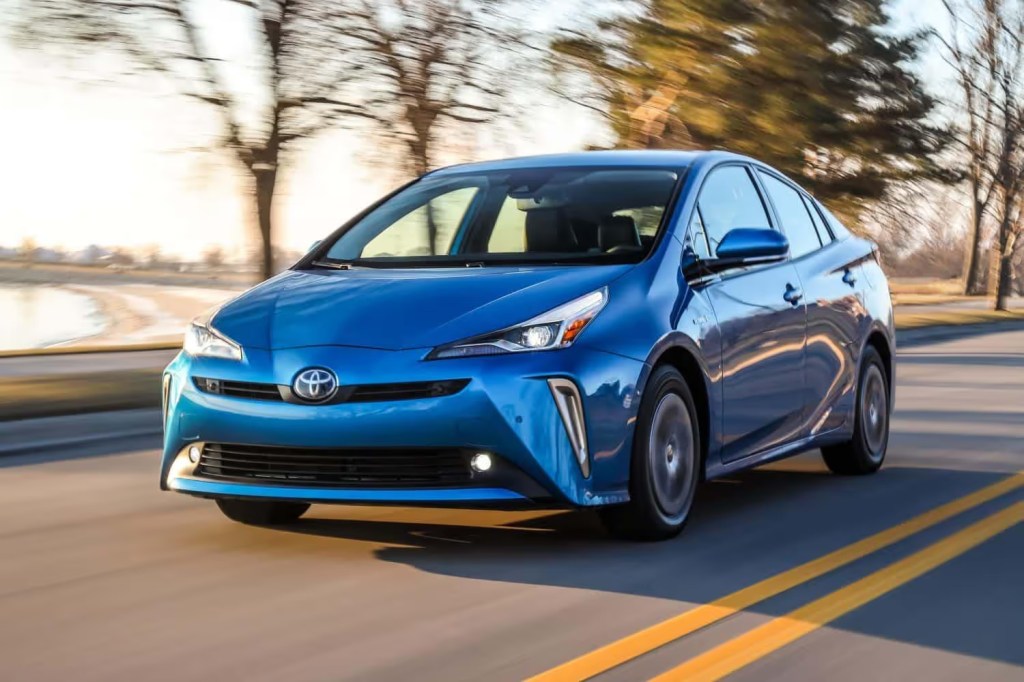
– The Toyota Prius
It’s one of the most hated cars ever. It’s slow, uncomfortable, a bore to drive, and it has the sex appeal of a bushpig. Reviews from top automotive magazines like Car and Driver and MotorTrend didn’t like the Prius much when it first came out. Saying that the interior was “a let down”, and the drivetrain was “mind-numbingly complex”. But, to some, that stuff doesn’t matter.
To those who exclusively buy organic vegetables, who wear sandals to walk around town and to those who think going camping is a dream vacation, the Prius was perfect. They could now buy a car that would represent, and show the world, that they care more about the environment than you do. It did so because, like the Bugatti Veyron, it created a new car genre: the Hybrid.
The Prius quickly became a symbol for eco-warriors. The tree huggers paid a premium for it; The Toyota Corolla was $6000 cheaper and was the better car of the two, yet, Toyota still sold an outrageous amounts of Priuses. Because the Corolla couldn’t help Greta Thunberg guilt-trip us into thinking we were destroying the planet so fast that we’d all die next week. The animosity created between Greta’s cult and the Carguys was unlike anything before. The Toyota Prius, and ultimately the message it stood for, went against everything we cared for. So we hated it, insulted it, and some even destroyed it; it became a martyr. A martyr so influential that it did something no other car did better: it unified all the petrolheads together. Unfortunately, our joint hatred for the Prius has made it into what we hoped it would never become: an icon.
Toyota has another car on this list. Fortunately for us, it’s the complete opposite of the Prius. I’m obviously talking about:
– The Toyota Supra.
We talked about the Bugatti Veyron a little earlier. We talked about its top speed and how impressive that is. The Veyron produces 1000bhp, and that makes sense because VW, Bugatti’s parent company, spent so much money on this project that it would have been embarrassing to make any less. But 99.9% of us can’t afford a Veyron, which is why the Supra exists. The Supra isn’t beloved because of its beautiful curves or its performance as a sports car. No, the Toyota Supra has become a staple in the car world not for what it is, but instead, for what it has the potential to be.
See, the Supra, more specifically the 4th generation, is powered by a six-cylinder engine called the 2JZ. That motor is a gift from the engine gods. This gift was given to those willing to modify what was already a really fantastic engine. With a little tinkering, a bigger turbo, some friends and a few beers, it wasn’t uncommon to see 600 or even 800 horsepower out of a Supra.
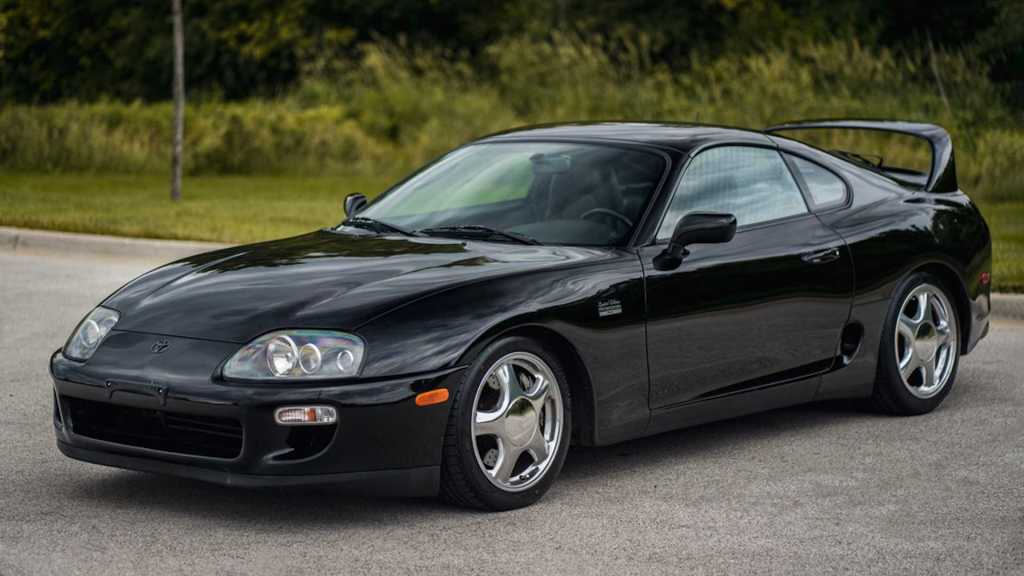
The internet loved it; seeing regular Joes armed with their Toyotas beating Lamborghinis and Ferraris for a fraction of the price was the automotive equivalent of David and Goliath.
Then Hollywood got involved. Paul Walker drove a bright orange Toyota Supra in The Fast And The Furious movies, and, in his words, it was “a ten-second car”. Meaning it could drag race a quarter-mile in 10 seconds. That’s properly fast, in case you didn’t know. Multiple generations of men grew up seeing the Toyota Supra on the big screen as THE car to have if you wanted to be a bad-ass street racing outlaw. And who doesn’t want to be a bad-ass street racing outlaw?
The Supra’s title of icon wasn’t randomly given; it was earned in real life thanks to the real street racers who were modifying their Supras and beating supercars. We had proof, it was all over YouTube. The movie said it was a great car, and the internet proved it.
To this day, teenage boys will point at a 4th-generation Supra with as much awe as they would any other exotic car. It is viewed as an icon by Hollywood, tuners, the internet, and the hearts of all men.
MotorTrend elected the Chevrolet Corvette as its icon of icons. It was elected thanks to an online poll. I can’t do the same so I think it should be up to you, the reader, to decide which one of the ten cars resonates the most with you.
This is obviously incredibly subjective; I don’t claim that my list is more accurate than the one MotorTrend did. We must remember that the Gods, the divine objects and, in our case, the cars we deem worthy of veneration differ depending on the culture one grew up in. I grew up in Europe, where the car culture is drastically different than it is here in the US, hence why I changed MotorTrends list.
However, despite not being one of MotorTrend’s picks, I think we will all agree on the last car I chose.
It has been used by military forces from all over the world including, but not limited to, the US Navy, the German army, and over 50 other armed forces. It is also an incredibly popular choice for celebrities; owned and very much shown off by Arnold Schwarzenegger, Kim Kardashian, and every other celebrity with enough money to buy one, or, if you’re Drake, five. This vehicle feels equally at home off-roading the harshest terrain as it does cruising on Rodeo Drive. Our final icon is:
– The Mercedes-Benz G-Class
I know I said that popularity doesn’t make an icon, but the G-Wagon’s popularity is unmatched. Mercedes tried to discontinue it and sell the GL-Class instead, but the G-Wagon’s sales were so good they had to switch their plans.
Word on the street is that Mercedes increased the price of the boxy SUV in hopes that sales would slow down, helping them justify removing the ex-military vehicle from their lineup in favour of the more elegant GL-Class. However, the price hike only made the G-Wagon more desirable. Rappers, actors, and celebrities of all sorts were showing them off as a sign of wealth. Soccer moms married to rich husbands followed suit. Shortly after, the whole world understood that if you wanted to show off your wealth, you had to have a G-Wagon.
No matter how hard Mercedes tries to get rid of it, no matter the economic climate, no matter how expensive it is, people just keep buying it. Partially because it’s a status symbol, but also because it actually is a really good vehicle.
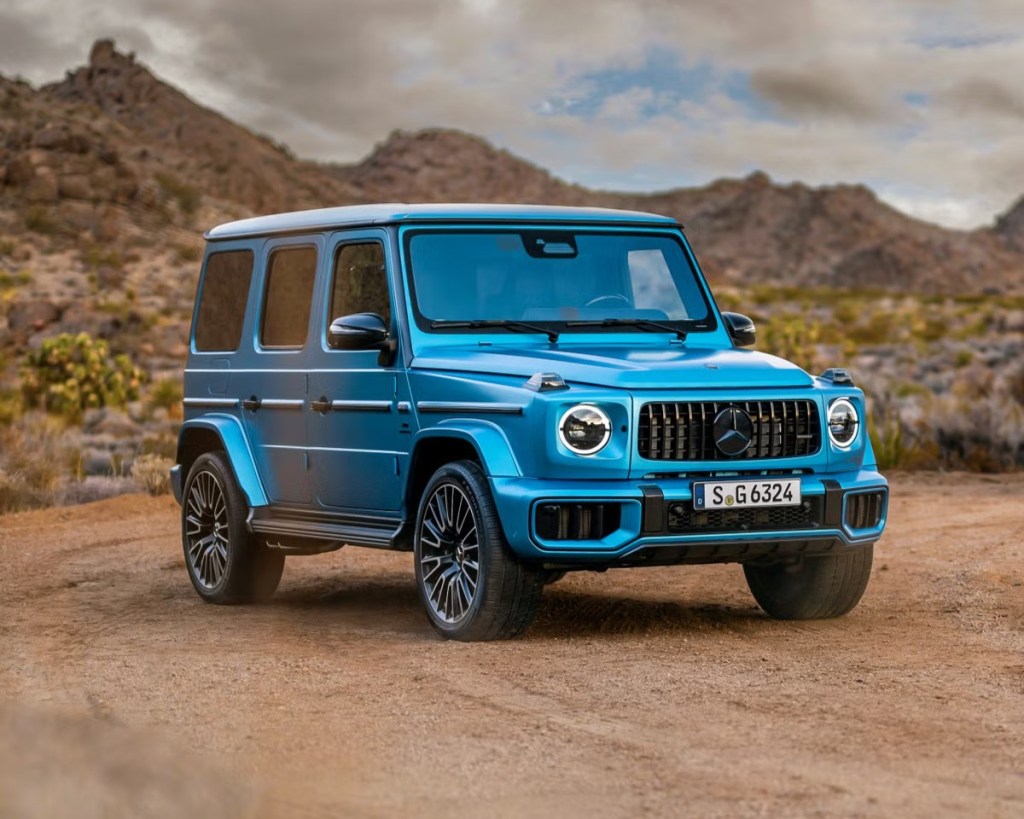
The G-wagon has many rivals; it is such a great off-roader that it’s been compared to the Land Rover Defender and the Ineos Grenadier. But these two don’t come close to the level of luxury and comfort the G-wagon offers. A level that is on par with the likes of Range Rover, BMW, Audi and Lexus. It is unique. Nothing compares to its off-roading capability, luxury, and status symbol. It’s the kind of car that if you love, you love, and if you hate it, it’s because you can’t afford it.
The Mercedes-Benz G-Class is an icon, without question, as it is in a league of its own.
Thanks for reading,
Max.


Leave a Comment!