
While walking through the Walmart parking lot, my wife pointed at a Jeep Gladiator and said, “That’s not a pickup truck, that’s a Jeep.”
I laughed a little, but then I realised she was serious. She continued, “If you ask the owner what he drives, he won’t say a Pickup Truck. He’ll say that he drives a Jeep. Therefore, it’s a Jeep, not a Truck.”
I obviously disagreed with her because it’s my job as her husband to do so, but she did have a point.
Come to think of it, the Jeep Gladiator isn’t the only truck suffering from the automobile equivalent of being misgendered. The Tesla Cybertruck is another example: many people say it isn’t a real pickup truck (my wife included), even though it literally has the word “truck” in its name!
So I ask, what is a real pickup truck, then?
Well, let’s start with the beginning, shall we?
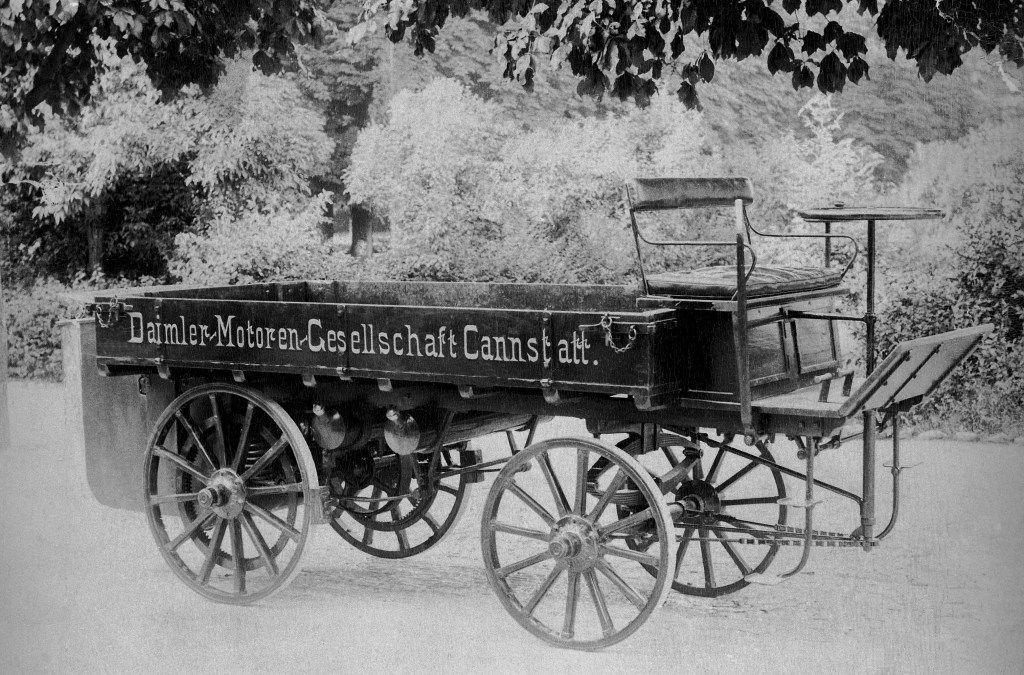
Unfortunately, the pickup truck’s origin is a little blurry. It doesn’t have a birth certificate, but, according to a quick Google search, one could argue that Gottlieb Daimler built the first pickup truck in 1896. It was used by farmers and industrial workers to carry goods (it was closer to a commercial lorry than a pickup truck).
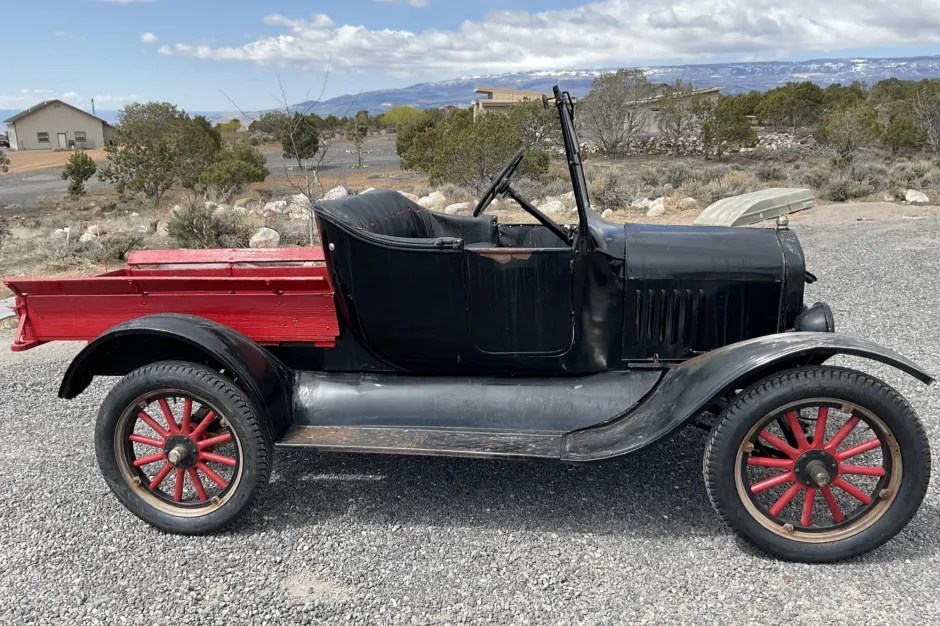
A good twenty years later, the Americans made what most people consider the first pickup truck. Chevrolet claims to have made theirs in 1918, in the form of a “chopped-up car.” – Quite literally, a car that had a truck bed surgically added after being built. Ford was the first to mass-produce a pickup truck, with its Model T.
But even before auto manufacturers mass-produced pickup trucks, third parties and privateers would cut the back half of their Model Ts to make them into one.
The original use for a pickup truck was ultimately to work more efficiently. Farmers realised that an internal combustion engine would work harder, faster, and longer than the four-legged alternative.
Not long after, in the 30s, pickup trucks were built and sold as standalone vehicles because by then, cars were designed in such a way that modifying them into trucks was not worth it. Cars were now too low and too sleek for a truck bed. This, in my opinion, is the true origin of the pickup – when they were purposely engineered, designed and built as pickup trucks. They now had their own platform and were seen as their own entity; instead of having cars and modified cars with a truck bed, we now had cars and pickup trucks.
Then, World War II arrived. From 1939 to 1945, all plants shut down. They were used for the military effort to build tanks, Jeeps, and trucks.
Lightweight trucks were converted to 4×4 heavyweight trucks or to tactical trucks. They were heavily modified to make them capable of operating off-road in any weather/condition and withstand the mechanical abuse of warfare.
After the war, everyone needed a few years to get their crap in order, it seems.
Pickup trucks, so far, had been strictly utilitarian. And the War really cemented that into society. Without the dependability and ruggedness of trucks – something cars couldn’t provide – God knows if the War would have been won.
We valued those attributes. We shortly realised that we’d not only valued them in the context of war but also in everyday life.
So, around the 50s, pickup trucks were not only the answer to a need – working more efficiently – but also to a demand. People wanted a vehicle that could navigate on and off the road, haul a lot of stuff around while doing so, and the War proved that pickup trucks are here to do just that.
Things started getting interesting when the 60s rolled up. Pickup trucks became more than practical vehicles for workers and the common folk. Crew cab trucks (the ones with four doors) not only needed to be spacious enough for a team of tradesmen, but also to fit the whole family, since the truck was usually the only vehicle in the household. So, with time, they became more comfortable, some might even say luxurious.
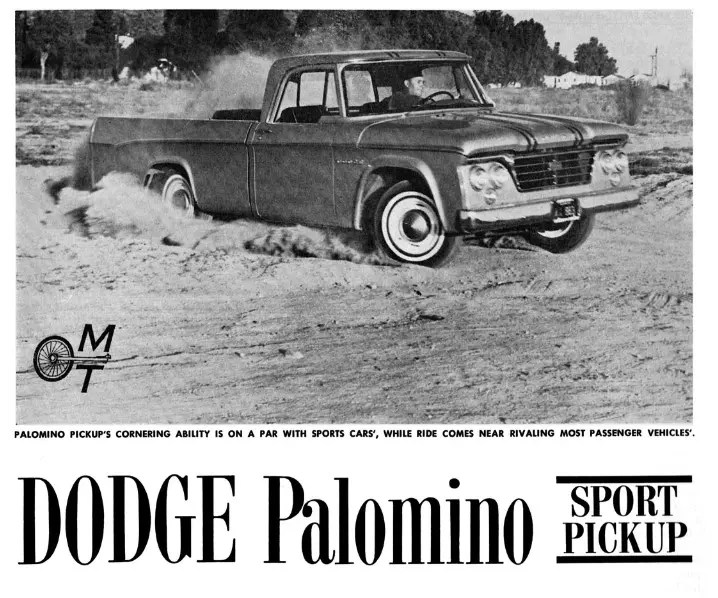
Then, in 1964, Dodge, in all their brilliance, lowered their truck and threw fat tyres and a big V8 at it. Only the Americans can come up with the idea of making a Sport Pickup Truck.
People fell in love with their pickup trucks. And by people, I mean Americans. They loved their trucks so much that they wanted to live in them! Thus, the RV was born. Thanks to a couple who quite literally built a house in the bed of their truck.
Around the same time, Ford released the Ranchero and Chevy released the El Camino. Two vehicles, with beds, built on a car platform… That caused the hardcore Budlight-drinking, Desert Eagle-wielding, cowboy-hat-wearing pickup truck owners to be pretty angry; we were back to making cars with truck beds again. Exactly what we veered away from in the ’30s… And, now that we’re talking about truck guys being mad, I’m assuming you’ve guessed that they weren’t very excited about sport and muscle trucks.
But with time, the sport trucks, the muscle trucks, the car-trucks and all the other quirky trucks that would get WhistlinDiesel’s knickers in a twist have built a huge following and are sometimes extremely desirable.
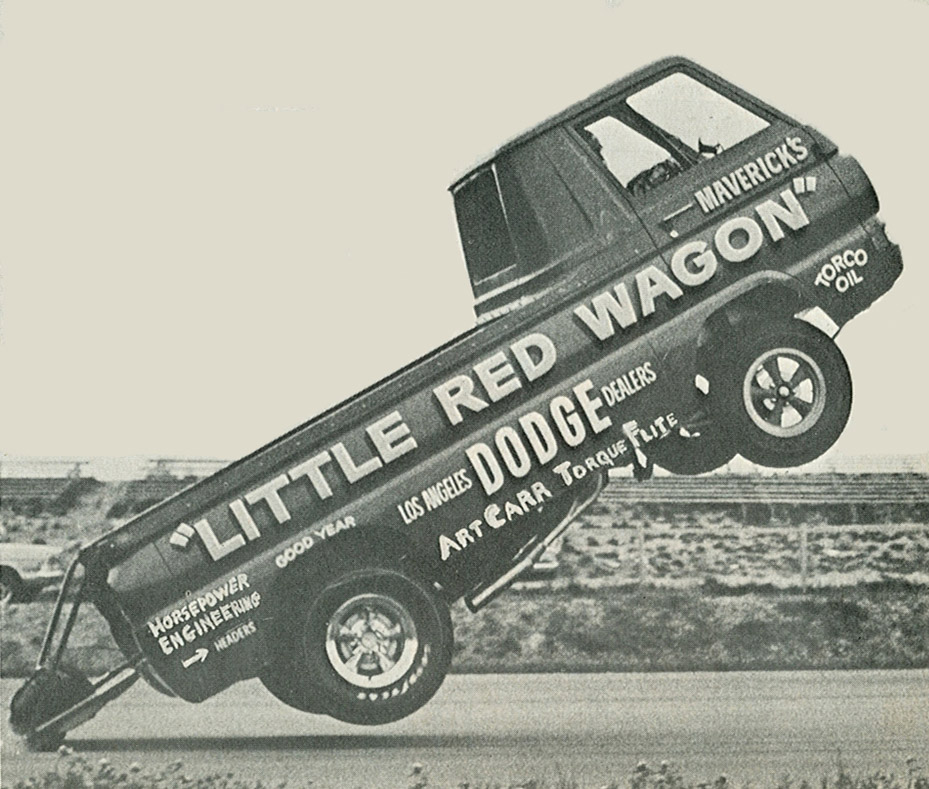
Back to the 1960s, Dodge (again) made what they called the ‘Little Red Wagon‘: a drag-racing truck. It was the first truck to do a wheely and was the world’s fastest truck at that time. So not only did trucks become sporty, but they were also really, really fast now.
Not long after, in the 70s, Bob Chandler built the world’s first monster truck, the Bigfoot. He didn’t build this for any practical reason, by the way; he literally said, “people like to see me crush things with it”.
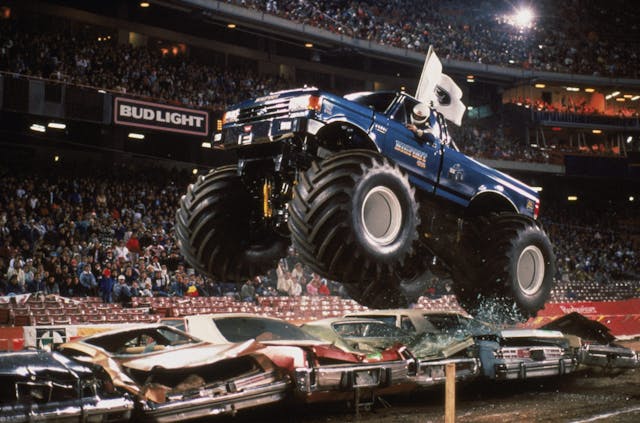
Later, because pickup trucks were also sports cars, and really fast, people started racing them. But these guys were racing seriously; they even made a league. Nowadays, there’s a super truck division of NASCAR. Clearly, a race series watched by hillbillies and people with a “I <3 guns” sticker on the back window of their lifted Ford F350 Dually.
Today, it isn’t uncommon to see electric pickup trucks. Ford and Chevy have made their own, but the poster boy of EV trucks is the Tesla Cybertruck, which is an incredible feat of engineering. It has, much like all the other previously mentioned unconventional trucks, caused quite a bit of frustration to some. To others, it is the best vehicle to have ever touched tarmac.
What we see is that, for the past one hundred years, the pickup truck has taken many different forms:
A utility vehicle and a towing machine, at first.
It later became a family car and, somehow, also a sports car.
More recently, it became a computer-on-wheels, such as the Cybertruck, but it can also be a house, a tank, and a racecar. Finally, it can be a car-crushing monster like Bigfoot, and I’m sure many other things.
The point is that a pickup truck isn’t what you think it is. It’s more complex than that. Some pickups can do things that others can’t because what we consider a pickup truck has changed a lot. We can see throughout history that trucks have, and will, come in many different flavours.
Ultimately, a truck needs only to do what you expect it to, for it is a tool – your tool – all it must do is meet your demands, and its mission will be complete.
To those searching for incredible towing capacity over a long distance, buy one of those massive diesel Duallys. I would agree with them that the Tesla Cybertruck or the Ford Maverick isn’t for them.
However, for those who want a versatile truck to pick up the kids from school, go grocery shopping, and occasionally throw the bicycles in the back while being good on gas, then the Maverick or the Cybertruck is definitely a good option. Heck, even the Jeep Gladiator could do the trick. But I wouldn’t recommend a Dually.
We can’t impose our own definition of a pickup truck on others. Its history is too blurry, it’s nearly undefinable. We should simply agree with this: as long as it has four wheels, a steering wheel, and a bed, then it’s a pickup truck.
Max.
 The Pit Lane - Blog
Leave a Comment!